Categories
Uncategorized

Cultural Experiment

Abby Harach 

5/8/26

English 120 

Professor Brocoman

                                     Cultural Perspective through the Eyes and Ears 

Hungary and Slovakia. Two countries that historically don’t have the greatest relationship with each other, yet, I am a product of the integration of both. Within this visual representation of aspects of my culture, I choose to incorporate multiple segments of images overlapping video footage  to show correlation through topics like youth, women, colors, and re-birth. Easter plays a big role in this visual since the majority of my culture’s traditions circle around the religion of Catholicism which in turn uplifts the values of gender roles, family roles, and economic prosperity.  

The classical/folk music playing in the background of the presentation is a piece called “Hungarian Dances” by Brahms, which creates a mood of suspense while also hinting at an underlying playful tone that is usually indicated in many of my culture’s spring traditions. The song selection is also a meticulous use of contrast between a visual of Slovak imagery and dress, with Hungarian song. Most people would not notice this if they don’t  know these cultures, but the use of a dog seeming distressed and confused invokes the “out of place” feeling, while the contrasting visuals of seemingly colorful and joyous seasonal traditions provides a more  intriguing approach towards the views of my culture. 

This project relies heavily on both Ethos and pathos through the music intensity, and context of the maker (me), a woman of slavic heritage and immigrant parents, while also including some logos due to the immense amount of cultural history being incorporated into this project. Although the use of these rhetorical appeals are necessary for an engaging display of culture, they also show the type of persistence that is being done in a modern world of minimalist society. Color and sound are sometimes, if not all the time, the most essential human sense out of the four senses combined. What I mean is that throughout time in this particular culture, trends of minimalism in household decor, clothes, and overall style have overshadowed the vibrance of it. Intricate flower patterns displayed in a sequence of images alongside a video of nature and flowers creates an open interpretation to the audience of whether the floral imagery paired with intricate human-made floral patterns essentially integrates into a more complex meaning of preservation within the natural world of my culture. 

Although I aim to highlight the implications made to preserve my culture through significant identities like nature, color, and music, there is also some aspect to my culture that is transformed/lost within the process of this continuity of historic and traditional knowledge. Tradition through morals and ideologies. Traditions will always be a big part of everyone’s culture, and time plays a significant factor in changing the way we maintain those traditions as well. Historically speaking, Slovakia and Hungary have not always been fond of the other’s traditional beliefs or systematic ways of living life. But despite tensions, there are many similarities regarding the terms that fall under the umbrella “traditions,” which is the morality aspect of traditions.

Women and girls within my culture have almost always been set to stand at a specific area in my culture, one that is viewed to be the constant caregiver while staying elegant, beautiful,  and respectful all throughout the day. This portrayal of women is not uncommon around multiple cultures, yet to some degree it confuses me. Within my culture, women and girls are referenced significantly higher in cultural traditions more than men. Why? Floral patterns, birds, colorful eggs, and nature are not inherently feminine, but when looking across numerous images, women are the ones  depicted with all the cultural emblems and colors. As a woman myself, I have come to notice that women represent the beauty and “re-birth” of our culture. But growing up, I noticed that recognition is not always equal to respect and acknowledgment. 

Within the portrayal of feminine beauty as a cultural identity, there is that part of society that looks down upon women as second class individuals compared to the men. Even though there still is that same ideology lingering within my culture to this day, my visual presentation of my culture contains a fragment of this behavior, while illuminating the whole presence of what it means to be a girl growing up in this societal view. 

Overall, this project illustrates the necessity to highlight the beauty in both of my cultures despite opposition all throughout the perspective of a young girl/woman. The preservation of color and music is quintessential for the continuity of unity within a society that surrounds itself around the catholic faith and gender norms, but also around the change of those same values. 

Outside Sources:

“Folk Art.” National Czech & Slovak Museum & Library Store, National Czech & Slovak Museum & Library

AI transparency Statement: I only used AI to help find some additional sources
Categories
Uncategorized

Culture Profile

Abby Harach

English for Social Sciences 

Professor Borcoman

March 2nd 2026

                              Watching a version of me become “we” 

Abdul defines culture in a more physical and visual aspect. Radios crackle to life with highlife music or morning news in Twi, Ga, or Ewe. Hums and rhythmic chants fill the dawning atmosphere as Abdul’s mom prepares a very famous and filling staple of fufu and egusi. Rich, yet nutty aroma escapes through each crevice of the home with a reviving nostalgia, familiarity, and security. Dances, storytelling, and food are some of the main aspects of culture that highlight community, togetherness, and respect that Abdul grew up with as a child, and is why he still, as a young adult, remains to stick by this view on culture. 

Coming back to the impact of Abdul’s culture, he emphasizes that “A person’s Marriage” is an especially impactful and significant event that helps define what his culture truly embodies. He emphasizes the importance of “a person” and not a specific individual that is familiar to him because, in his culture, marriage/ weddings are open for anyone to witness and join and not just close friends and family. It is the aspect of togetherness and community that Abdul finds truly inspiring when he talks more about his experiences where his culture is prevalent. “Marriage in my culture is not only for close friends and relatives, but for everyone.” No lawyers or churches. Just people coming together.” This type of stance on a very personal and special moment in an individual’s life is something that really stood out to me and my experience because of its vulnerability surrounding other cultures’ views on private moments.

What to Expect at a Ghanaian Wedding ...– “Some live by love thy neighbor as thyself,

others by first do no harm or take no more

than you need. What if the mightiest word is love?” Alexander, Elizabeth. “Praise Song for the Day.” Graywolf Press, 2009.

When going into key components of someone’s culture, I found that a prevalent access point was engaging in mutual understanding surrounding me and Abdul’s cultural upbringing. To be more specific, we were able to let the vulnerability of our stories connect and bring up mutual understanding of one another’s experiences. Some of these experiences include what values are the most important in our families and that similarity was discipline and respect. “ You always got to have a word with an elder.” Abdul’s values of discipline and respect shows through his high regard and respect for his elders in particular. I asked if he mainly only took “elders” ‘respect into a higher regard compared to people who may not be of that particular age and he asked me:  “Well, would you trust in me or someone like your parents?” and I came to a stop because in my mind my parents have not always been right nor the biggest influential people in very specific contexts, but in general I had to agree. That is one area in which I saw our cultures somewhat differ. These differences are what I believe is important to come into view to better  embrace your own cultural beliefs  because indifference fades, and you become more aware of the various different ways in which you judge your culture and theirs. This in turn allows for a more open-eyed view of your choices in life. An outsider’s perspective different to your own can bring fresh insights and questioning into your own beliefs and how you decide to go about your life. New perspectives bring open-mindedness, a better intellectual mindset for curiosity and healthier relationships/ interactions with views that you may not 100% agree with. Some things that may get lost is nuance or potential misinterpretation and skepticism (lack or trust) from another person because of their openness to their opposing views. Many people don’t like to open up about their culture simply because they fear they may be distanced from certain friends or family. This is unfortunately a mindset that is heavily embedded in my family’s culture, yet I choose to stray from it. “Bonding with people no matter how close they are is something that I feel is important for people from other cultures to understand surrounding my culture. Since some people may find it a little strange, but in my culture, that is where you become immersed in the community.” This quote from Abdul really stuck with me regarding the community aspect of culture and has even opened my perspective to my own culture.When observing and comparing our own culture to others, authors like Zadie Smith express noticings like,“Throughout his campaign Obama was careful always to say “we.” He was noticeably wary of “I.” By speaking so, he wasn’t simply avoiding a singularity he didn’t feel, he was also drawing us in with him.” Speaking in Tongues (4) These focuses show a type of togetherness that Abdul keeps in higher value and therefore, allows community in familiarity to become very common in almost every culture, but community in difference and the unfamiliar is something that I started to notice more even in my culture once I started to search for it.  From similar hobbies like football (soccer), to the unfamiliar like traditional Oware, Abdul and I have found aspects of familiarity and connectedness in the “extraordinary” of each other’s ordinary parts of our life surrounding our culture. Abdul described Ghana as a vibrant memory of his upbringing, highlighting hobbies, experiences, and lessons learned. 

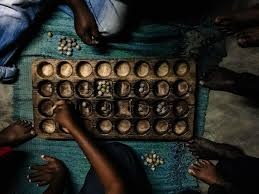
 “ Oware is this game where you put marbles into this wooden board with dips, but me and my family used to play with marbles and use holes in the ground.” Simple games like Oware to Abdul took notice of his culture’s traditional methods of community building through games and others, and realized the importance of using resources to their full advantage. In American society, me and Abdul agree that some of our values do carry very preveniently into our everyday life but sometimes there is resilience in acknowledging that there are many cultural views we don’t agree with yet it is not ignorance to those views that carry forward, but a finding of common ground. 

AI Acknowledgment & Usage 

I used AI for the sole purpose of helping me find sources for articles, poems, and other inspirational media to better compare to my writing/ Abdul’s own story and cultural experiences.

I also referenced the google AI to help with any citation errors I might have done. 

Citations 

  • Smith, Zadie. “Speaking in Tongues.” Changing My Mind: Occasional Essays, Penguin Press, 2009, pp. 3–20.
  • Alexander, Elizabeth. “Praise Song for the Day.” Graywolf Press, 2009.

Cultural Profile Reflection

Throughout the process of developing my cultural profile, I noticed that my strengths come in the form of developing a solid and straight forward thesis/ goal of what my writing is supposed to be aimed toward and focused on, as well as my implementation of outside sources that support my writing. 

Some weaknesses have been my overall structure of my writing and overall flow of writing, this includes the implementation of transitions, cohesive idea sectioning and connecting, and simplicity when connecting two or more ideas within a single paper. 

Some overall goals I have for my writing is to advance and get better at my listed weaknesses I noticed throughout my cultural profile, while also aiming to obtain better ways to simplify my writing to the extent where it doesn’t come off as too confusing to a reader who is seeing my writing for the first time. 

I believe that my skills in creative writing are a little bit stronger than my academic writing due to the somewhat lack of consistency in my structure in terms of visual presentation (paragraph structure) but within my cultural profile I found the observation aspect to be helpful in terms of condensing my ideas into a cohesive thesis, with a much better formulated essay structure than what I would normally write. 

The incorporation of the importance of a visual agenda increased my engagement into my own writing rather than just simply “writing stuff down” for a grade. ( Writing about engagement with my own surroundings has helped the way I write to my intended audience.)

Categories
Uncategorized

Subculture Essay

Abby Harach 

English 120

Professor Borcoman 

3/30/26

                     Crafting your own way to household hygiene 

While most people quickly check their carts with the next big hit of products advertised to either successfully clean any surface of your home, or completely transform your living space into a whole new house, there are others that decide to look away from purchasing any commonly found brand of cleaning product in their household. Do It Yourself or “DIY” groups are a subculture most commonly associated with the action of making your own necessities instead of adhering to the consumerism market of big brands and flashy advertisements. 

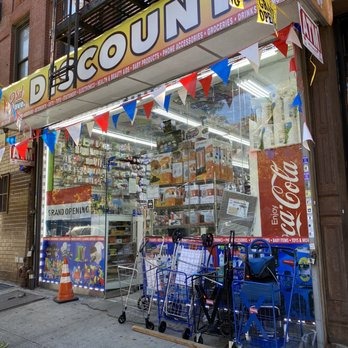
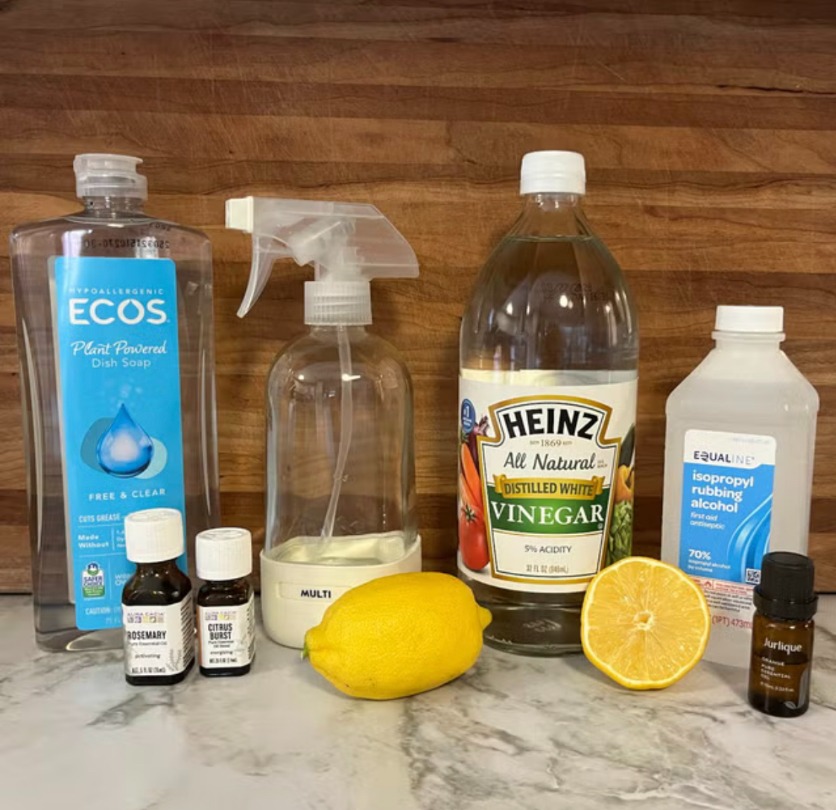
On the upper east side of Harlem, there is a local convenience store right alongside the emmerson deli that I live near on 3rd avenue 100st NYC. In this particular store, people go in with a similar mindset of obtaining a handy or quick product to satisfy their goal at that exact moment. I ran into many instances where this convenience store saved a mishap in the kitchen, or saved me time and money to buy a brand new set of markers for a school project that needed to be handed in the same day.  Products like vinegar, baking soda, and even some essential oils are selected from the shelves to make bars of soap as it is a hygiene necessity that needs to be restocked. For individuals who are just starting to look into getting into the subculture of making your own cleaning and hygiene products, this convenience store in particular aids and even encourages in the curiosity of doing so by stocking products next to each other with subtle hints around the placement on what products work well together, and how they work well. The pairing of dawn dish soap and white vinegar make a perfect surface cleaner without any additional chemicals or bigger price tag attached. I later notice a mother and her two children enter the convenience store. “ Mom can we get this” “No, we have that at home, love.” A box of baking soda is held in one hand and in the other, a silicone mold shaped as four leaf clovers. 

The phrases “ we have it at home” or “I can make that for a lot cheaper and better” became very common in my time surrounded by locations just like the convenience store and even in my own home. Growing up in an immigrant household where soup was the main staple for a nutritious but cheap dish, I came to become very familiar with the term “ doing it yourself” and cleaning products were no exception. Just like the fluorescent lights highlighting the many different items on the shelves, my home became the pinnacle “ingredient household.”  Fresh lavender filled the kitchen as my mom poured her new concoction into a reusable old spray bottle that consisted of very commonly found ingredients while the cool breeze of early spring air lifted the mood of the dim apartment. Saving on cleaning products was not only a common practice in my household, but a simple act embedded into our cleaning routine. “It is generally agreed that sub-cultures resist assimilation to the wider, dominant culture, yet this resistance gradually yields to the necessities of earning a livelihood and raising a family in a context suffused with ideas, behaviors, and objects that seep through the membrane separating the subculture from the surrounding world” – Dowd, James J., and Laura A. Dowd. “The Center Holds: From Subcultures to Social Worlds. This particular quote from a publication under the “American Sociological Association” introduces the aspect of familiarization and integration of a lifestyle, like making your own cleaning products, a common practice within particular households like mine and many others with similar situations. Yet when noticing the integration of lifestyles like “DIY,” within multitudes of common practices including hygiene, physical places like our own homes or the convenience store on 3rd av are not the only atmospheres where people can experiment or find similar interests surrounding this subculture. 

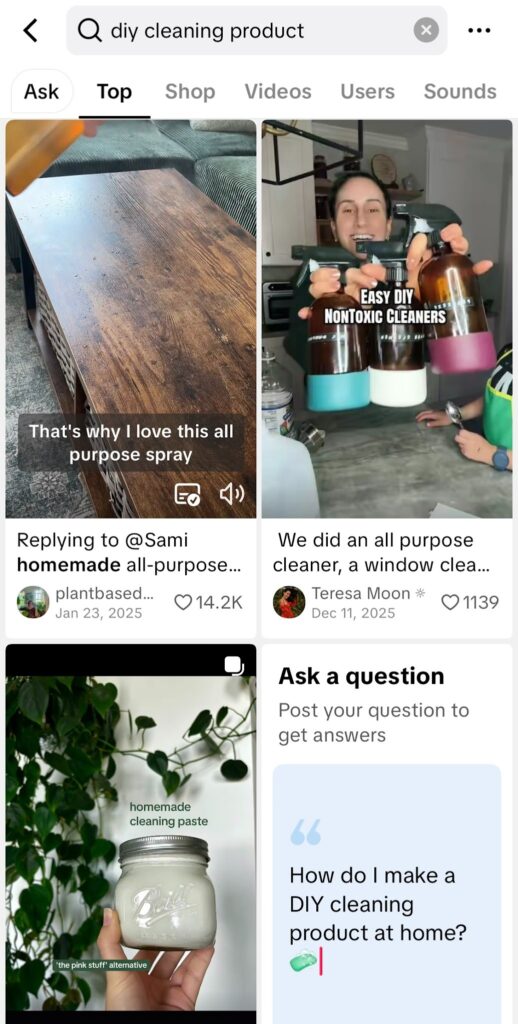
      The repetitive buzzwords like “found at home” and “easy to make” hook people like my own family instantly, as well as in subreddits and tik tok communities, so why don’t all people join in on the creatives who try to reduce the amount we spend on home cleaning products?

“A third type of subculture-and the one least likely to assimilate-includes all groups defined not on the basis of an ascribed status characteristic like ethnicity, but rather on an achieved, or volitional, characteristic such as a common world view, political or religious beliefs, or lifestyle preference (Talbot 200) – Dowd, James J., and Laura A. Dowd. “The Center Holds: From Subcultures to Social Worlds.”  The characteristics of people that tend to join subreddits or in-person communities that share tips/ tricks on how to obtain the best recipe for a household cleaning solution usually tends to be individuals who are either environmentally conscious, want to save money, like simplicity in their products, or all of the above. 

      When searching through social media for ideas, the subreddit “moderetlygranolamoms” pops up as a first recommendation. Under this post, the question is “ Give me a run down of your homemade cleaners and what you use them for!” and while there are a bunch of posts recommending numerous combinations of ingredients for specific cleaners, many include phrases like “no harsh chemicals compared to all the mystery ingredients” attached to their recommendations to appeal to the specific audience that tends to relate to these groups, while also enhancing their reliability through similarity. People start listing combinations up and down, and some I never thought of like the use of pure vodka and water for the removal of bacteria/ odors for fabric. 

Some people may argue that it’s not convenient enough to save a couple of dollars, especially when someone has an already busy schedule and does not have time to make their own products. Conflict constantly has a way of creeping up on social media platforms specifically, even in content sharing “frugal lifestyles and habits.” The thought of living on a budget or having to constantly ration certain products is completely outside the familiar norm of most people who tend to look for mainstream consumer products for their own household hygiene. Terms like “unhygienic” and “over the top” tend to come up against subcultures that choose to make their own products, but for most families like mine and the mom at the convenient store’s, it is an essential aspect of our own lifestyle that helps maintain a good balance between spending on excessive products and essential ones. 

Although going against D.I.Y cleaning products is  the case for many people, especially busy New Yorkers, individuals within the DIY aspect of this subculture argue that preparing your own household cleaning products are beneficial both for your own health and ecologically in the long run. A New York Times article labeled “ Do D.I.Y Cleaners really work?” publicist Ronda Kayson inspected this tension with a conclusion backed by research. The interest in do-it-yourself cleaning formulas comes out of a growing anxiety that products sold on supermarket shelves may contain harmful chemicals, and many potentially include volatile organic compounds known to cause asthma, headaches, allergic reactions, and potentially even cancer or organ damage. The nonprofit advocacy organization labeled as the “Environmental working group” reviewed more than 2,000 cleaning products, and found that more than half contaminated ingredients that irritated the lungs. With sources such as this NY Times article and James J  Dowd and Laura A. Dowd’s  The Center Holds: From Subcultures to Social Worlds where it’s discussed people essentially adapt and obtain new and unique subcultures into their typical “norm” through sociology.  “Counter-cultures actively resist assimilation, while other types of subcultures are far less likely to do so. Placing the emphasis not on behavior but on pressure towards assimilation avoids the many vagaries and arcane distinctions (and the resulting confusion experienced by students) that are the predictable result of efforts to classify similar groups into not only different but opposed

Categories” -Dowd, James J., and Laura A. Dowd. “The Center Holds: From Subcultures to Social Worlds.” As I venture throughout the little area of east harlem that I call home, I realize not everyone is perceived the same, and especially bec

DIY home products reflect a broader shift toward creativity and personalization in everyday life, and communities comprised of this type of subculture thrive on shared knowledge, online tutorials, and experimentation, so If it is either through aspirations of a new found love for crafting, cutting back on spending, or wanting to obtain a cleaner and more eco-friendly lifestyle, people such as my parents and the mom with her two children in the convenience store both find individuality within this small subculture within their larger mainstream cultural norms. 

Sources 

  •  Ronda Kaysen, “Do D.I.Y cleaners Really Work?” N.Y. Times article, 2019    NY Times Article
  • Dowd, James J., and Laura A. Dowd. “The Center Holds: From Subcultures to Social Worlds.” Teaching Sociology, vol. 31, no. 1, 2003, pp. 20–37. JSTOR, https://doi.org/10.2307/3211422. 

AI Transparency Statement:

I didn’t need any AI in my writing unless it was the AI feature used when looking up academic sources on google. 

Categories
Uncategorized

Self Assessment

Abby Harach 

Professor Borcoman

English 102 

5/22/26 

                                                                 Self Assesment 

Throughout the semester, I have realized the importance of continuity with creative writing, print/ digital technology, as well as the need for “diversity” within every writing style within a specific context.  

From writing for myself in the beginning of class, to introducing my culture in a display of visual representation, my goals have been oriented toward presenting myself the best I can through writing and digital display to captivate my both intended audience, and a version of my self within my writing. 

My time throughout the second semester of freshman year (2025-2026) has mainly been about recognizing and understanding how to implement key research sources, how to find them, how to cite them, as well as realizing key rhetorical terms and strategies used within literary/ linguistic projects. 

I have been able to use the CCNY digital library to help with outside sources like “JSTOR” or other academically credited sites to continue my curiosity and help the goals of my work. 

I noticed that my strengths come in the form of developing a solid and straight forward thesis/ goal of what my writing is supposed to be aimed toward and focused on, as well as my implementation of outside sources that support my writing. 

Some weaknesses have been my overall structure of my writing and overall flow of writing, this includes the implementation of transitions, cohesive idea sectioning and connecting, and simplicity when connecting two or more ideas within a single paper. 

Strategies such as summary, analysis, synthesis, and argumentation are all used to get a specific point across to the reader in a given context. And within every one of these strategies, I have been able to incorporate multiple from written work to media. From the process of learning these essential strategies, I found that collaboration and revision are two key parts of all. Whenever we were given the chance to get into groups for revision, I always found feedback from my peers to be very useful, especially to gain any sense of critique from a set of fresh perspectives.

I believe that my skills in creative writing are a little bit stronger than my academic writing due to the somewhat lack of consistency in my structure in terms of visual presentation (paragraph structure) but within works like my cultural profile, subculture essay, and brainstorm worksheets for my cultural works,  I found the observation aspect to be helpful in terms of condensing my ideas into a cohesive thesis, with a much better formulated essay structure than what I would normally write. 

The incorporation of the importance of a visual agenda increased my engagement into my own writing rather than just simply “writing stuff down” for a grade. ( Writing about engagement with my own surroundings has helped the way I write to my intended audience.) 

In terms of technicality, I see myself aiming to get better at citations, clarity and concision (both writing style and sentence structure), as well as sentence fluency. 

Although literary work is a key aspect of all of my work done throughout this semester, there is also the addition of integrating visual and technological aspects on top of your writing. Some examples involve my visual component (video) of my cultural experiment, where I used music and images to accentuate the main idea of my overall essay. This component in my English 102 class is just another aspect of how my development within the literary world advanced. The incorporation of visual works with writing is that it gives a wider and more open outlook on your initial aim and perspective. 

As someone who has been fascinated with music integration in writing, typical linguistic standards can sometimes oppress language users. The “ideal” writing format is usually taught in the teen years of education to integrate a solid structure that is believed that everyone must go by within academic writing, but that only makes everyone’s voice sound the same and gives a disadvantage to non-native speakers to share their own voice within the literary arts. There are times where it is necessary to implement a set structure for writing, but in most cases, there should also be leniency when writing about something from an individual perspective or perspective of another to enhance the reader’s understanding of the main purpose of the writing. 

In my time this semester, I came to understand the implementation of discipline/ structure with leniency within my writing. Using phrases I normally would deem as “not academic” while also continuing to progress in my citation skills and other necessary strategies. 

AI Transparency Statement:

I did not use any AI in my writing.

Categories
Uncategorized

Welcome Page

My Name is Abby Harach, I am a rising first year undergraduate at the City College of New York with an aspiration of working in research.

I am currently undecided, but hope to pursue a bachelor’s in science and a minor in music (performance.) I hope to continue engage in more writing throughout my time at City College both academically and personally.

This site will display all of my work throughout my second semester and aims to share what progress I have made.

Throughout this site you will find both visual presentations of my cultural projects, as well as literary works related to them.

Thank you for visiting my site!